





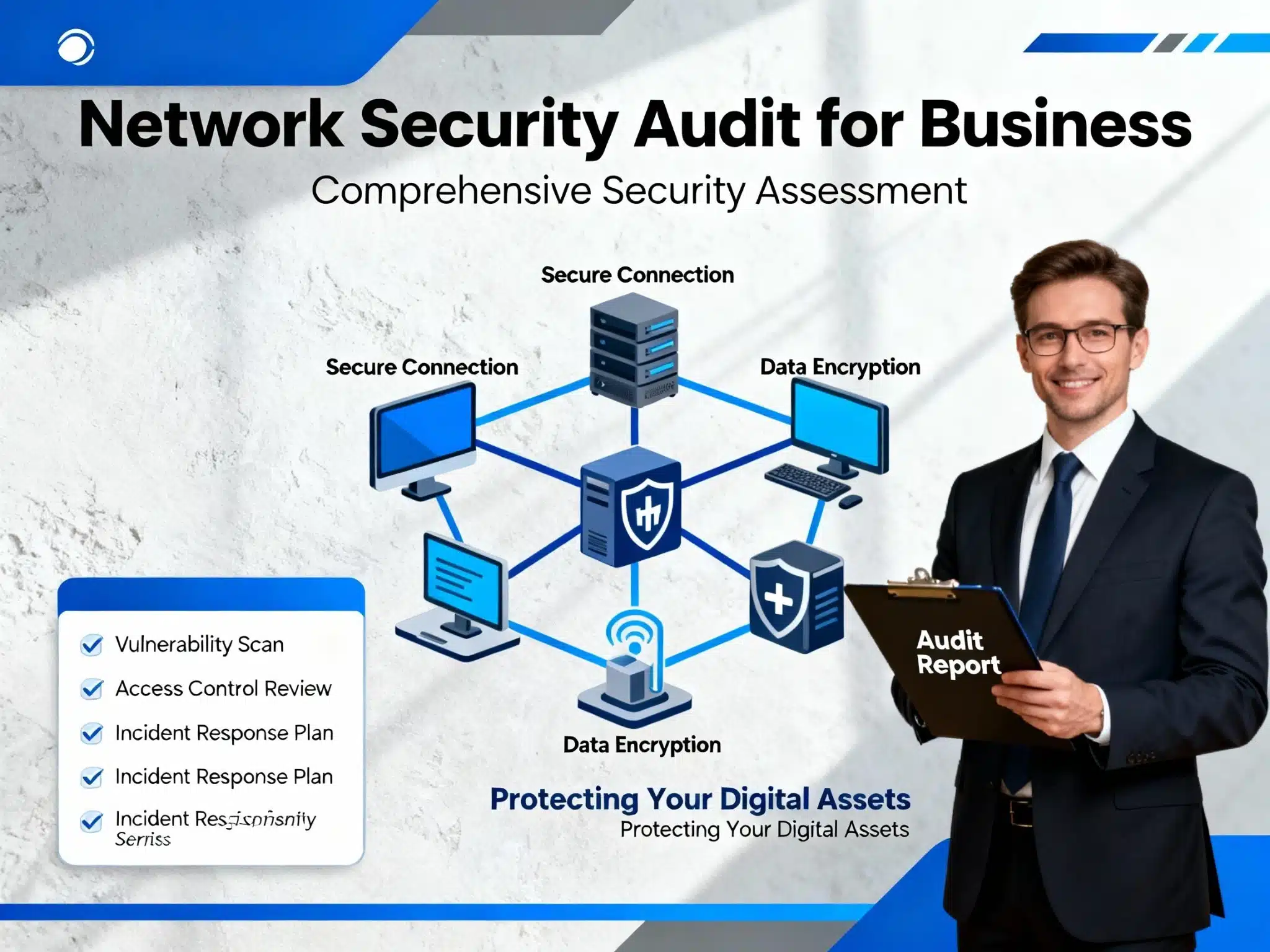
The rise of cyberattacks has changed how businesses operate in the digital world. From small companies to large enterprises, every organization now depends on secure networks to keep their operations running smoothly. In this fast-evolving environment, one essential step has become non-negotiable the network security audit. A network security audit acts like a diagnostic health check for your IT infrastructure, identifying vulnerabilities before cybercriminals exploit them. In 2025, when cyber risks are more sophisticated than ever, understanding how a network security audit works can save your business from data breaches, financial losses, and reputation damage.
What Is a Network Security Audit?
A network security audit is an in-depth assessment designed to evaluate the structure, performance, vulnerabilities, and compliance status of your entire IT network. During a network security audit, security experts analyze devices, servers, firewalls, policies, user access, and data pathways. The primary goal of a network security audit is to detect weaknesses that hackers could exploit. Modern audits use automated scanning tools, manual testing, and compliance checks to ensure overall protection. Many organizations perform a network security audit annually, but high-risk industries often need quarterly audits to maintain security standards.
Why Every Modern Business Needs a Network Security Audit
Cyber threats have evolved rapidly — phishing, ransomware, DDoS attacks, and insider threats are now common. A network security audit helps you stay ahead by providing precise insights into how secure your environment is. Without a network security audit, companies often operate blindly, unaware of hidden risks. It not only protects sensitive data but also supports compliance standards like ISO, GDPR, HIPAA, and PCI DSS. For IT teams, a network security audit ensures proactive security rather than reactive firefighting. Businesses that consistently conduct a network security audit experience fewer breaches and stronger operational continuity.

Benefits of Conducting a Network Security Audit – Clear Explanation
A network security audit is essential for every modern business because it helps protect systems, data, and digital operations. Here’s a clear breakdown of its major benefits:
1. Identifies Critical Vulnerabilities
A network security audit pinpoints hidden weaknesses that attackers could exploit.
These vulnerabilities may include:
- Outdated or unpatched software
- Unsecured open ports
- Wrong firewall configurations
- Exposed APIs
- Users with unnecessary or risky privileges
Finding these issues early helps prevent future cybersecurity incidents.
2. Strengthens Regulatory Compliance
Industries such as banking, healthcare, education, and finance must follow strict security standards.
A network security audit ensures your business meets compliance frameworks like:
- ISO 27001
- GDPR
- HIPAA
- PCI DSS
Passing these audits helps avoid legal penalties and protects customer data.
3. Improves Network Performance
A network security audit doesn’t just improve safety — it also enhances speed and efficiency.
The audit identifies:
- Overloaded servers
- Unnecessary background services
- Misconfigured hardware
Fixing these issues results in a faster, more stable network.
4. Prevents Costly Breaches
Cyberattacks can cause major financial loss due to downtime, data theft, and recovery costs.
A network security audit reduces the risk of:
- Ransomware attacks
- Data breaches
- Unauthorized access
- Insider threats
Proactive auditing is far cheaper than recovering from an attack.
5. Enhances Business Trust
Customers prefer companies that value security.
A network security shows:
- You follow cybersecurity best practices
- You protect customer information
- Your business takes risk management seriously
This builds a stronger reputation and increases client confidence.

Complete Process of a Network Security Audit – Clear Breakdown
A Network Security Audit is a structured and step by step process that helps businesses identify vulnerabilities, strengthen defenses, and ensure complete protection of their digital infrastructure. Companies like Elysian Communication Private Limited follow a detailed approach to make sure every layer of the network is assessed effectively.
Step 1: Pre-Audit Planning
The Network Security Audit begins with careful planning, where the scope of the audit is clearly defined. This includes identifying the systems, devices, applications, and networks that need to be evaluated. Security goals, compliance requirements, and expected outcomes are also established during this stage. Proper planning ensures that the audit is aligned with business objectives and focuses on critical areas that require attention.
Step 2: Network Mapping
In this step, a complete map of the organization’s IT infrastructure is created. All network components such as servers, databases, routers, switches, user groups, and cloud services are identified and documented. This phase of the Network Security Audit provides a clear understanding of how data flows within the system and helps in identifying potential entry points for cyber threats.
Step 3: Vulnerability Assessment
The next step involves scanning the network using automated security tools to identify weaknesses. These tools detect issues like missing patches, outdated software, malware infections, and misconfigurations. This stage of the Network Security Audit generates a detailed list of vulnerabilities that could be exploited if not addressed promptly.
Step 4: Penetration Testing
After identifying vulnerabilities, ethical hackers simulate real world cyberattacks to test the strength of the network. This step helps determine how attackers might gain access, what data they could compromise, and how effective the current security measures are. Penetration testing provides practical insights into the real time security posture of the organization.
Step 5: Policy & Access Review
During this phase, all security policies and user access controls are reviewed. Authentication methods, user permissions, and data access levels are carefully analyzed to ensure that only authorized individuals can access sensitive systems. This step in the Network Security Audit minimizes the risk of internal threats and unauthorized usage.
Step 6: Firewall & Endpoint Review
Inspect:
- Firewall rule structure
- Anti-virus effectiveness
- Endpoint security settings
- Device-level protection
This step focuses on evaluating the effectiveness of firewall configurations and endpoint security. Auditors check firewall rules, antivirus systems, endpoint protection tools, and device level security settings. The goal is to ensure that all entry points into the network are secure and capable of preventing unauthorized access.
Step 7: Risk Report Generation
A detailed report is created with:
- Vulnerabilities found
- Impact analysis
- Risk level
- Recommended fixes
Once the assessment is complete, a comprehensive report is prepared. This report includes all identified vulnerabilities, their potential impact, risk severity levels, and recommended solutions. The Network Security Audit report helps businesses clearly understand their current security status and prioritize necessary improvements.
Step 8: Implementation & Monitoring
Once the audit is complete:
- Security patches are applied
- Vulnerabilities are fixed
- Monitoring tools track new threats
The final step involves fixing the identified issues and strengthening the network. Security patches are applied, vulnerabilities are resolved, and monitoring tools are implemented to track future threats. Continuous monitoring ensures that the Network Security Audit remains an ongoing process, helping businesses stay protected against evolving cyber risks.
Network Security Audit Checklist for 2026 – Clear and Modern Version
Before beginning a network security audit, experts follow this updated checklist:
- Document every device connected to the network
- Review firewall rules for accuracy
- Ensure user permissions follow least-privilege principles
- Confirm all systems are updated with the latest patches
- Monitor network traffic for unusual patterns
- Evaluate antivirus and EDR tool performance
- Review both physical and cloud security controls
- Test backup and disaster recovery procedures
- Check logging systems, SIEM tools, and alerting mechanisms
- Validate compliance documentation with legal requirements
This checklist ensures no security layer is skipped.
Tools Commonly Used in a Network Security Audit – Clear Explanation
Professionals choose tools based on your network size and industry. These tools help scan, identify risks, and generate detailed audit reports:
- Nmap – Network scanning and device discovery
- Wireshark – Packet analysis and traffic monitoring
- Nessus – Vulnerability scanning
- Qualys – Cloud-based security assessment
- SolarWinds – Network performance monitoring
- Snort IDS/IPS – Intrusion detection and prevention
- Metasploit – Penetration testing framework
- Burp Suite – Application security testing
- ManageEngine OpManager – Network health monitoring
- Splunk – Log analysis and threat detection
These tools allow auditors to find vulnerabilities quickly and accurately.
Why Choose Elysian Communication Private Limited – Clear and Professional Version
Elysian Communication Private Limited stands out as a trusted cybersecurity partner for businesses across India, offering advanced and result driven solutions tailored to modern digital challenges. With a strong focus on protecting critical infrastructure, their expert team delivers comprehensive services that ensure complete network security and risk management.
One of their core strengths lies in in depth vulnerability scanning, where advanced tools are used to identify hidden weaknesses in your systems, applications, and network infrastructure. This is complemented by ethical hacking and penetration testing, where certified professionals simulate real world cyberattacks to evaluate how resilient your systems are against potential threats.
They also provide compliance audits aligned with global standards such as ISO, PCI, HIPAA, and GDPR, helping businesses meet regulatory requirements while avoiding legal and financial risks. Their expertise extends to firewall configuration and endpoint security checks, ensuring that every entry point into your network is properly secured and monitored.
A key advantage is their 24 by 7 monitoring and incident response, which ensures that any suspicious activity is detected and addressed immediately. With real time threat detection tools, businesses gain continuous visibility into their security posture, enabling faster decision making and proactive defense.
Additionally, they deliver detailed audit reports with prioritized recommendations, allowing organizations to clearly understand risks and take strategic action. With proven experience across industries such as IT, finance, healthcare, retail, and education, they provide scalable and reliable cybersecurity solutions tailored to each sector.
Choosing Elysian Communication Private Limited means partnering with a team committed to safeguarding your business, ensuring compliance, and building a secure and future ready digital environment.

Benefits of a Network Security Audit
1. Identifies Hidden Vulnerabilities
A network security audit uncovers security gaps such as outdated software, misconfigured firewalls, weak passwords, open ports, or devices with unsafe settings. This helps businesses fix risks before attackers can exploit them.
2. Ensures Regulatory Compliance
Industries like banking, healthcare, finance, and education must follow strict security regulations. A network audit helps your business meet compliance standards such as ISO 27001, GDPR, HIPAA, and PCI DSS to avoid penalties and strengthen trust.
3. Enhances Network Performance
The audit identifies factors slowing down the network—like overloaded systems, unused services, or hardware misconfigurations. Optimizing these elements leads to faster, more stable, and more efficient operations.
4. Reduces the Risk of Cyberattacks
By detecting vulnerabilities early, businesses avoid costly breaches caused by malware, ransomware, phishing, or insider threats. A security audit helps strengthen your entire cybersecurity framework.
5. Builds Customer Trust
When clients know your business takes cybersecurity seriously, it increases their confidence. A network security shows your commitment to data protection and responsible IT management.
6. Improves Incident Response Readiness
An audit evaluates your existing response plans, backup strategies, and disaster recovery processes to ensure your business can bounce back quickly after any attack.
7. Protects Business Reputation
Avoiding breaches means avoiding downtime, bad publicity, and loss of customer confidence. A strong audit keeps your brand reputation strong.
Flowchart: Complete Network Security Audit Process
Below is a clean, structured flowchart you can copy into blogs, presentations, or documents:

Frequency Asked Question’s (FAQs)
1. How often should a company conduct a network security audit?
Most businesses conduct a network audit once every 6–12 months, but high-risk industries need quarterly audits.
2. Who performs a network security audit?
Certified security analysts, ethical hackers, and cybersecurity teams conduct audits with a mix of manual and automated tools.
3. Is a network security audit different from a vulnerability assessment?
Yes. A vulnerability assessment finds weaknesses, while a network security reviews policies, configurations, compliance, and overall security posture.
4. What industries require mandatory network audits?
Healthcare, banking, software companies, government agencies, e-commerce, and telecom sectors require regular audits.
5. Does an audit slow down business operations?
Not usually. Most tasks happen in the background or during non-business hours to avoid disruptions.
Conclusion
In today’s digital world, cybersecurity is no longer optional but essential for every business. A Network Security Audit acts as the first line of defense against growing cyber threats such as data breaches, malware, and unauthorized access. Whether you are a startup, SME, or large enterprise, regular audits help identify hidden vulnerabilities, improve system performance, and ensure your network remains secure and efficient.
A well structured Network Security Audit not only strengthens your security framework but also ensures compliance with industry standards and regulations. This reduces legal risks and enhances your organization’s credibility in the market. Additionally, maintaining strong security practices builds customer trust, as clients feel more confident knowing their sensitive data is protected.
With expert support from Elysian Communication Private Limited, businesses can implement advanced security strategies tailored to their needs. Their professional approach helps organizations stay protected against evolving threats while ensuring scalability and long term stability.
In conclusion, investing in a Network Security Audit is a smart and necessary step toward safeguarding your digital assets. It prepares your business for future challenges, strengthens resilience, and ensures continuous protection in an increasingly connected world.